
The fertile soil of the Columbia River Basin is Wallula county, Washington produces delicious apples, pears, cherries and sweet onions craved by consumers across America and abroad. Union Pacific Railroad Company is building on its reputation, dating to 1862 when President Lincoln and former railroad attorney signed the Union Pacific Charter, by UP Cold Connect at the inland Port of Walla Walla. The intermodal transloading operation uses modern technologies to maintain freshness for produce, beverages, frozen foods and dairy customers in all segments of the food market: grocery/retail, food service, grower/shipper, manufacturing, brokers/traders, wholesale/distributors.
Wallula county and Washington state are the heartland of agriculture commerce where 300 commodities are grown and harvested and is ranked number one in the United States for apples, cherries, pears, raspberries and hops. Walla Walla, derived from Native Americans meaning “many waters”, began growing sweet onions as a specialty vegetable from 1900. UP Cold Connect transports onions from various areas to reach consumers in fresh conditions. Walla Walla farmgate production was $437 million in 2017 and processing, marketing and transportation raises that contribution to over $2 billion per year, according to the Washington Agriculture Statistical Service.
UP Cold Connect
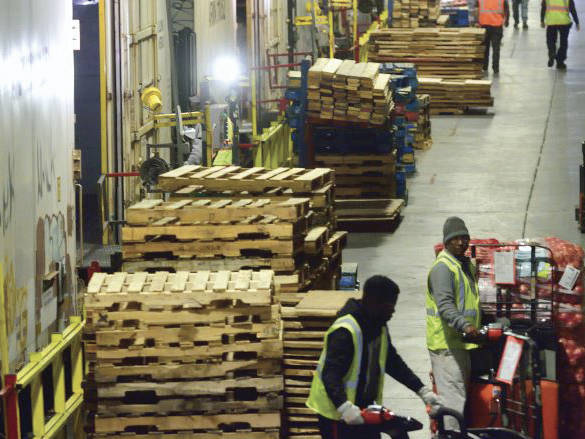
UP Cold Connect acquired the Railex LLC assets in January 2017 in the Wallula county facility that are 225,000 square feet of refrigerated space (33-55 degrees F), 5,100 pallet positions, 6 computer controlled temperature zones, 19 enclosed refrigerated rail docks, 38 refrigerated truck docks, a 2-mile rail loop track on the property, and United States Department of Agriculture (USDA) inspections. This operation is in the Dodd Road Industrial Park of Port of Walla Walla and is adjacent to US Highway 12, and near the UP Railroad main line. UP Cold Connect postponed a $15 million expansion project for an intermodal ramp facility.
In 2017, UP Cold Connect also acquired Rotterdam, New York assets of equal area and services as well as Delano, California assets of 131, 000 square feet of cold storage and 10,000 square feet freezer (-20 degrees F). All facilities have full services by rail and truck as well as less than truck load (LTL) consolidation for all commodities. The Wallula facility has annual shipments of 750 million pounds of produce from the Northwest to East Coast markets via the Chicago hub of UP on the UP Food Train Network.
Excursions and hand offs between modes of road, rail and on the docks, can cause valuable fruits and vegetables to lose their freshness. Less bruising means less waste since one third of all fresh fruits and vegetables produced globally are lost because of lack of refrigerated capacity. UP Cold Connect ensures temperature-controlled docks never break the cold chain for packaged produce by partnering with Crest Logistics to manage warehouse operations of loading and unloading product to/from trucks and railcars. Crest Logistics is a wholly owned subsidiary of C.R. England. “In addition, Union Pacific wholly owned commercial subsidiary, Loup Logistics, works with third party locations across the country to allow for seamless multi-modal transportation options to a multitude of destinations,” remarked Director Peters.
A typical shipment of Walla Walla grown fruits or vegetables is guided by a very precise operation by logistics and information technology specialists in UP Cold Connect at the Port and in Rotterdam, New York. Peters described that a “shipment starts on Cold Connect by placing an order of any quantity. The Cold Connect team arranges the truck pick up from the grower origin site and back to our warehouse.” The truck contents are verified that the temperatures match the bill of lading to maintain the cold chain. “Every load has a visual inspection, and pulp temps and photos are taken to record. Each movement of the product uses Radio Frequency (RF) technology to track pallets to scan the location for inventory accuracy.”
Cross Docked
Products are cross docked into UP’s refrigerated box cars. “We use proprietary loading procedures to carefully load the railcar to maximum capacity. Using this platform allows customers who do not have access to rail, or would not reach critical mass, to ship by rail, the same advantages.” UP expedited rail service interchanges to CSX in Chicago for final destination at Rotterdam, New York. The team of specialists unloads the car in the same process, then matches UP LTL commodities to ship to customers in the Northeast USA and Canada.
Dedicated information technology specialists interact with the transportation providers while the precious cargo is in transit for timely delivery. These specialists can “remotely monitor temperatures while in transit and provide information to our customers in customized formats, including integrating into Transportation Management Systems (TMS) and usage of electronic data interchange (EDI)/Application Program Interface (API),” explained Peters. Trains leave the Wallula facility 5 days a week to speed goods to market to the Northeast arriving on the 7th or 8th day door to door delivery.
Union Pacific Railroad Company is invested in environmentally sound technologies to fully benefit from the carbon emission reduction advantages by rail for customer shipments. “Railroads are one of the most fuel-efficient means of transportation. On average, trains are four times more fuel efficient than trucks,” said Peters. If 10 percent of freight now moving by truck moved by rail instead, our country would annually save about 1.5 billion gallons of fuel, according to the Association of American Railroads. Union Pacific is working to reduce their carbon footprint and help their customers to do the same. “A great example of our commitment to sustainability is the introduction of our new refrigerated railcars, which are equipped with hybrid refrigeration units designed to improve efficiency and reduce emissions. They are also equipped with double-sealed doors to protect freshness and prevent thermal loss,” concluded Director Peters.


