
With expanding containerized and breakbulk cargo service offerings and a wide range of activities extending beyond freight movement, ports along the Gulf Coast of Florida are collectively enjoying dynamic times.
Ongoing infrastructure enhancements augur to bring even greater gains to the diverse Sunshine State ports along the Gulf of Mexico.
Port Manatee
This year celebrating its 50-year anniversary, Port Manatee continues to set records, including a peak of nearly 10.1 million cargo tons in its fiscal year ended Sept. 30, 2019, while handling a diverse array of commodities, from petroleum products and juice concentrates, to granite and limestone, to forest products and containerized produce.
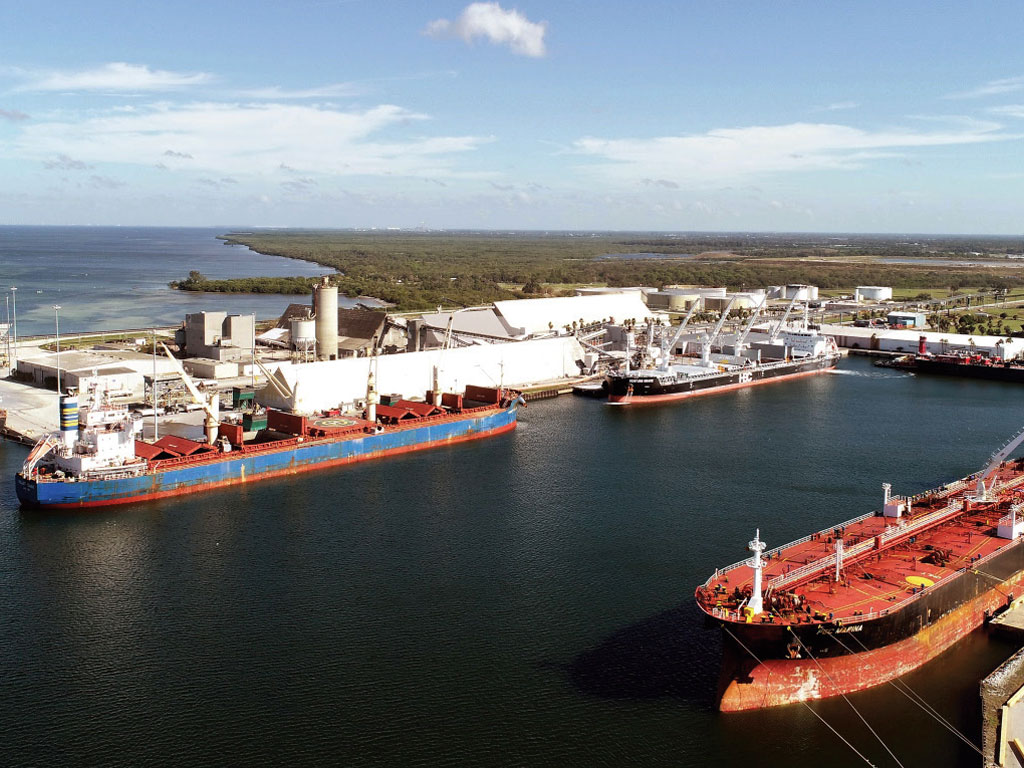
In January, fast-growing Port Manatee-based World Direct Shipping extended through 2026 its port agreement and added a third vessel to its weekly services from Mexico, which began with a single vessel in late 2014. On the perishables import front, WDS joins Del Monte Fresh Produce Co., now in its fourth decade bringing bananas, pineapples and avocados to its on-port Southeast distribution hub.
Located near Tampa Bay’s entrance, Port Manatee is the closest U.S. deepwater seaport to the expanded Panama Canal and serves as a gateway to dynamic markets of Central and Southwest Florida while offering nearly 5,000 acres of surrounding green space for development. The International Trade Hub at Port Manatee is extending its global reach with opening of overseas promotional offices in Argentina, Chile, Colombia and Spain.
Port Tampa Bay
Port Tampa Bay, Florida’s longtime largest port by total cargo tonnage and land area. is building on an impressive year of bringing in more containerized cargo business to augment a broad mix of bulk and breakbulk activity. Zim Integrated Shipping Services Ltd., Mediterranean Shipping Co., Maersk Line, CMA CGM, China Ocean Shipping Co., Evergreen Line, APL and OOCL now all offer service via Port Tampa Bay, with three new direct weekly containerized cargo services from Asia having been added over the past year or so.
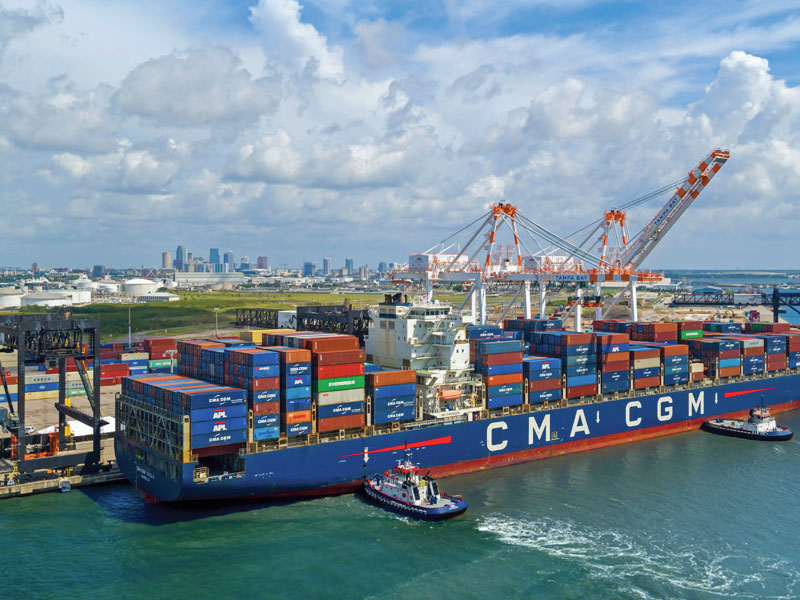
Port Tampa Bay’s container terminal, operated by Ports America under a long-term agreement, is currently undergoing a major expansion to double capacity, with the first phase slated to be completed this summer.
The port’s proximity to the red-hot industrial real estate market along Florida’s Interstate 4 corridor is driving demand as importers and exporters enjoy savings of time and money moving goods to and from Central Florida. More than 300 distribution centers sit along the I-4 corridor between Tampa and Orlando, with truckers now making multiple roundtrip deliveries per day to and from the port.
Port of Port St. Joe
As the Florida Panhandle continues its recovery from the October 2018 strike of Hurricane Michael, the Port of Port St. Joe is engaged in a more sustained rebound, as it seeks to bring its surrounding area an economic boost that has been lacking since the closure more than two decades ago of the St. Joe Paper Co. paper mill and box plant.
The Port St. Joe Port Authority is working with IndieDwell Florida, a leader in steel modular housing, and Bright Community Trust, Florida’s largest not-for-profit land trust, to build a 82,000-square-foot factory on port property. The project is seen as providing the community with much-needed jobs, as well as a possible housing solution to the area damaged by Hurricane Michael.
In addition, the port continues to seek funding to dredge the Port St. Joe shipping channel to its permitted depth of as many as 37 feet and has been allocated $10 million in community development block grant money from the Gulf County Board of County Commissioners.
Port Panama City
Port Panama City has recently completed the first phase of its new East Terminal, featuring a 900-foot-long bulkhead and berth, a 50-car-capacity rail yard and a 260,000-square-foot forest products warehouse. This spring, the facility’s access channel is being deepened to 36 feet. The new terminal infrastructure is adjoined by land for eventual building of a second berth and more warehousing, with another 30 acres for future development.
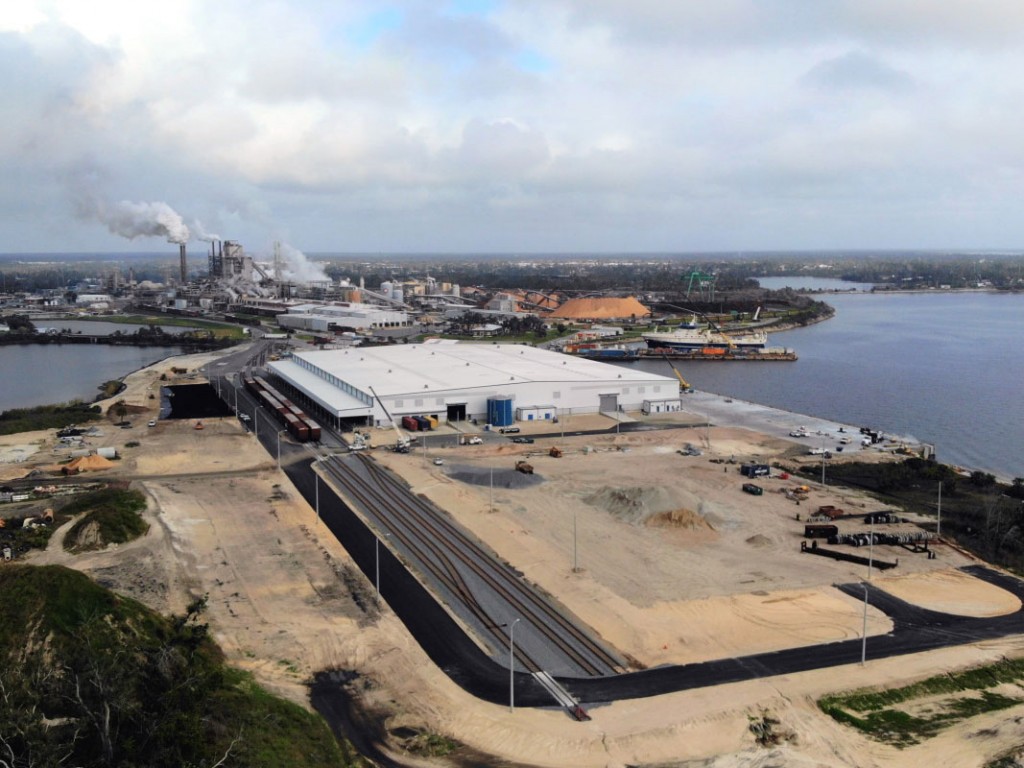
G2 Ocean is already calling the East Terminal, furnishing inbound service from North Europe and outbound service to the Mediterranean and North Europe, being joined in late February by a new Far East service – the port’s first such direct offering in two decades.
At Port Panama City’s longstanding West Terminal, Oslo Bulk has initiated high-frequency breakbulk service with Central America and Caribbean, using geared vessels catering to shippers of forest products. Also, the port has been awarded a $10 million federal grant to be joined by $2.7 million in state funds to support a $14 million expansion of wood pellet storage facilities, with that construction scheduled to get under way in early 2021.
Port of Pensacola
At the west end of the Florida Panhandle, the city-owned Port of Pensacola is enjoying significant gains, according to multiple metrics. In its fiscal year ended Sept. 30, 2019, the port nearly doubled its operating revenue from the prior 12-month period, to $2.41 million from $1.26 million, while increasing breakbulk volume by 78 percent, to 64,638 tons, and wind energy component shipments by 126 percent, to 1,632 units.
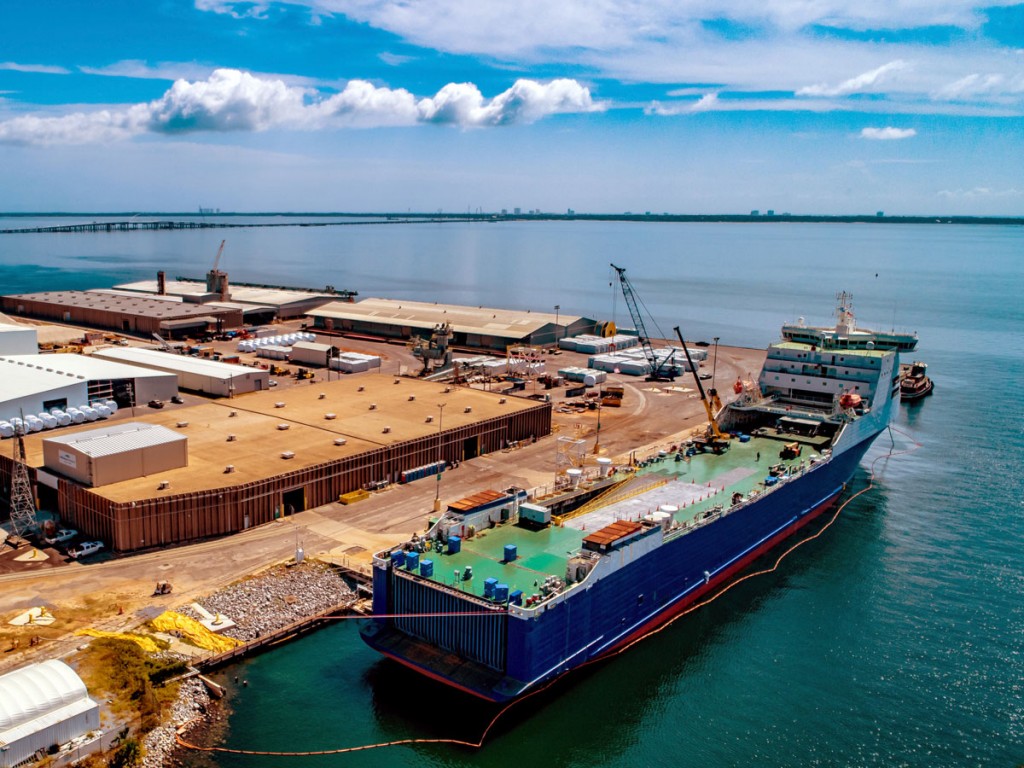
The port is advancing $3.1 million in berth restoration work and $450,000 in upland cargo initiatives and is pursuing development of a new facility for marine repair and overhaul.
This year, the Port of Pensacola is implementing a new vision plan, seeking to attract new tenants while providing expansion opportunities to existing users. The port currently houses a wide variety of tenants in industries ranging from cement and building materials to sailing and oyster farming. Tenants include Cemex, Pensacola Bay Oysters, American Magic Sailing, Blue Origin, Pate Stevedore, Martin Marietta and Offshore Inland Marine & Oilfield Services. The port’s international trade partners and cargo routes encompass Mexico, the Bahamas, Brazil and Israel.


